

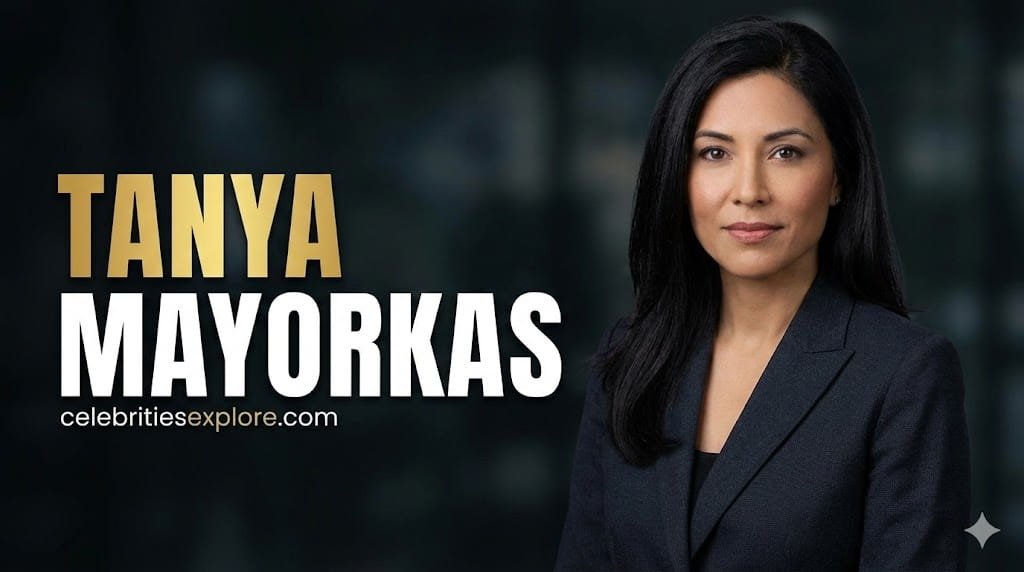
Perhaps the most intricate and closely watched institution in the US government is the Department of Homeland Security (DHS). The DHS needs leadership capable of navigating a maze of political pressure and logistical problems because it is tasked with everything from cybersecurity and counterterrorism to border management and disaster response. Tanya Mayorkas, the man in charge of this enormous organisation, has a personal background that is similar to the groups his department frequently works with.
Tanya Mayorkas offers a distinct viewpoint to the position as the first immigrant and Latino to hold the position of Secretary of Homeland Security. Polarised discussions on immigration reform, border security issues, and the changing risks of the internet age have characterised his term. A career rich in federal service, legal knowledge, and a strong bond with the American dream, however, lies beyond the news headlines and political controversy.
Knowing a cabinet member is only one aspect of comprehending Mayorkas; another is being aware of how American security policy is evolving in the twenty-first century.
Early Life and Education: The Journey of a Refugee
1959 saw the birth of Alejandro Nicholas Mayorkas in Havana, Cuba. The geopolitical unrest of the time influenced his early years. His family had to make the tough choice to leave Fidel Castro’s communist government after the Cuban Revolution. With the anguish of displacement and the desire for a solid future, Tanya Mayorkas parents packed what they could and departed for the United States in 1960 when he was still a baby.
Mayorkas grew up in Los Angeles, California, where the family had made their home. His public persona and policy philosophies would subsequently be based on this immigrant experience—escaping persecution and seeking safety in America. He frequently attributes his dedication to public service to his parents’ appreciation of the United States.
Tanya Mayorkas was a standout student at the University of California, Berkeley, where he graduated with honours with a Bachelor of Arts degree. He pursued further studies at Los Angeles’ Loyola Law School, where he graduated in 1985 with a Juris Doctor. His viewpoint was further shaped by these early years in California, where he received a demanding legal education as well as exposure to the state’s broad cultural tapestry.
Advancing Through the Legal Profession
Mayorkas was establishing a strong name in the courts before he was influencing national policy in Washington. He started his legal career as an Assistant United States Attorney in the Central District of California. He focused on prosecuting white-collar crime for more than ten years, managing intricate cases including money laundering, financial fraud, and public corruption.
His persistence and legal knowledge were not overlooked. Tanya Mayorkas was nominated by President Bill Clinton in 1998 to be the Central District of California’s United States Attorney. He was the youngest U.S. Attorney in the country when he was confirmed.
Mayorkas supervised high-profile prosecutions that attracted national notice while serving as U.S. Attorney. In order to vigorously pursue hate crimes and discriminatory conduct, he established the district’s Civil Rights Section. In addition, his office pursued long-standing corruption in local government and overthrew the ruthless Mexican Mafia in federal racketeering trials. During this time, he became known as a practical law enforcement official committed to justice and public safety rather than as a partisan.
Also Read More: Kathleen Nimmo Lynch
Obama Administration Political Appointments
When Barack Obama was elected, Mayorkas moved to the nation’s capital. He was named Director of U.S. Citizenship and Immigration Services (USCIS), the organisation in charge of managing the nation’s legal immigration system, in 2009.
Mayorkas was given the responsibility of overhauling USCIS, an organisation that was frequently criticised for its opaque and lethargic bureaucracy. The agency established the Deferred Action for Childhood Arrivals (DACA) program and reorganised its organisational structure under his direction. Hundreds of thousands of young undocumented immigrants—often referred to as “Dreamers”—were able to live and work in the United States without fear of deportation thanks to the historic DACA program.
He was promoted to Deputy Secretary of Homeland Security in 2013 as a result of his achievements at USCIS. He oversaw a $60 billion budget and 230,000 workers as DHS’s second-in-command. In addition to leading the department’s response to the Zika and Ebola virus outbreaks, he also led initiatives to improve aviation security and fight cybercrime. He was prepared for the top position he would eventually hold years later by this post, which acted as a crucial proving ground.
The Confirmation Procedure: A Battlefield for Politics
The political landscape has changed significantly since Tanya Mayorkas time in the Obama administration when President-elect Joe Biden nominated him for Secretary of Homeland Security in late 2020. Despite being a historic nomination, it encountered considerable obstacles in the Senate.
The intense partisan division over immigration policy was reflected in the heated confirmation hearings. Republican senators questioned Mayorkas about his prior handling of the EB-5 visa program while he was employed by USCIS. They cited an Inspector General report that implied he had improperly influenced certain cases, which he vehemently denied and which earlier investigations had examined without discovering any criminal wrongdoing.
His ability to implement stringent border control measures was also questioned by his detractors, who feared that his policies would encourage illegal immigration. In February 2021, the Senate confirmed Mayorkas by a vote of 56-43, despite strong opposition and a filibuster attempt. Party lines were generally followed in the voting, indicating the turbulent reign to come.
Secretary of Homeland Security tenure

Secretary Mayorkas faced immediate challenges upon taking office amid a worldwide pandemic and escalating political unrest. His main responsibility was to protect the American people, but what that meant was changing.
Handling the Crisis at the Border
The Biden administration faced an influx of migrants along the U.S.-Mexico border almost immediately. As the face of the administration’s reaction, Tanya Mayorkas was entrusted with overseeing an unprecedented number of asylum seekers while undermining the strict rules of the Trump administration. In order to establish a “safe, orderly, and humane” immigration system, he focused on a humane enforcement strategy. This included cracking down on people smuggling networks, increasing processing capacity, and attempting to address the “root causes” of migration in Central America.
Domestic Extremism and Cybersecurity
Despite the border taking up most of the news, Mayorkas said that two of the biggest challenges to the country are domestic violent extremism and cybersecurity. In order to defend vital infrastructure against ransomware attacks and foreign espionage, he strengthened the Cybersecurity and Infrastructure Security Agency (CISA) and started projects. In addition, after the events of January 6, 2021, he ordered DHS to devote additional resources to fighting domestic terrorism, designating it as a priority threat.
Stances and Positions on Policy
Mayorkas’s approach to policy is based on the idea that human rights and national security are complementary. Hardliners on both sides of the political spectrum are irritated by his strategy, which frequently looks for a middle ground.
Reforming Immigration
Tanya Mayorkas is an outspoken supporter of legal immigration routes. In order to address what he refers to as a “broken” immigration system, he has continuously pushed for legislative reform. He is in favour of providing undocumented immigrants who have lived in the United States for a long time with a road to citizenship, especially DACA participants and important workers. But he also believes that the border needs to be safe, and he favours technology over physical barriers like the border wall, citing examples like sophisticated surveillance towers and scanners.
Climate Change and Disaster Response
Mayorkas has incorporated climate resilience into DHS’s primary goal after realising that climate change poses a security risk. In recognition of the growing frequency and severity of extreme weather occurrences, the Federal Emergency Management Agency (FEMA) has expanded financing for pre-disaster mitigation under his direction.
Disputations and Rebuttals
Although no DHS secretary has avoided controversy, Tanya Mayorkas has been the target of special attention.
The Attempt at Impeachment
The Republican-controlled House of Representatives posed the biggest threat to his leadership. Mayorkas became the first cabinet secretary to be impeached in almost 150 years when the House decided to remove him in February 2024. In relation to border detention policy, the articles of impeachment charged him with “wilful and systemic refusal to comply with the law” and “breach of public trust.”
Critics claimed he had successfully opened the border, allowing criminals and fentanyl to flood the nation. Tanya Mayorkas argued that policy disagreements are not grounds for impeachment, dismissing these accusations as unfounded and politically motivated. Although the Senate ultimately declared the allegations unlawful and dropped them without a trial, the incident permanently damaged his record.
Left-wing Criticism
Additionally, Tanya Mayorkas is under fire from immigrant advocacy organisations and leftists. Although he eliminated several Trump-era practices, his administration has strengthened asylum limits that some activists claim violate international law and has continued to use some expulsion powers (such as Title 42) for a while. His administration has occasionally seemed to the left to be a continuation of enforcement-focused strategies rather than the full humanitarian reform that was promised.
Achievements and Accomplishments
Despite the divisive atmosphere, Tanya Mayorkas has accomplished a great deal during his time in office.
Welcome to Operation Allies
Operation Allies Welcome, the enormous endeavour to relocate tens of thousands of Afghan refugees after the U.S. exit from Afghanistan in 2021, was one of the logistical successes he oversaw. An accomplishment of interagency collaboration, DHS managed the screening, processing, and resettlement of these allies in record time.
Joining forces for Ukraine
In a similar vein, Mayorkas was in charge of the “Uniting for Ukraine” initiative, which facilitated American sponsorship of Ukrainians escaping the Russian invasion. His idea of a more adaptable, responsive immigration system that may use private sponsorship to help in times of need was shown in this scheme.
Updating the Workforce
Mayorkas has concentrated on boosting morale inside DHS, a division that has a history of low employee satisfaction. He has advocated for increased mental health resources for law enforcement officers operating in high-stress situations at the border as well as higher compensation for TSA agents.
Impact and Legacy
The conflict between Alejandro Mayorkas’ principles and the harsh reality of government will probably define his legacy. Though he spent most of his time handling political scheming and logistical issues, he came to power with the goal of re-establishing America as a nation of immigrants.
But his influence goes beyond national boundaries. He has updated the department’s focus for the digital age by making cybersecurity a primary priority. He has equipped the agency for future dangers that are entirely related to a changing planet and have nothing to do with hostile actors by incorporating climate resilience into homeland security.
Even if the political landscape beneath him changed violently, history might see him as a transitional figure—a leader who tried to turn a vast law enforcement agency towards a more humanitarian attitude.
A Complicated Number for Complicated Times
Alejandro Mayorkas is a study in contrasts: a political appointee who maintains that his work is apolitical, an immigrant who executes deportation laws, and a prosecutor who supports rehabilitation. A classic American tale, his journey from a refugee child in Havana to the position of Secretary of Homeland Security is one of aspiration, hardship, and dedication.
Mayorkas will have an impact on how the United States strikes a balance between security and liberty as the Department of Homeland Security develops. His influence on modern American history is indisputable, regardless of whether one sees him as a committed public servant constrained by a dysfunctional system or as a failing administrator of the country’s laws.
FAQs, or frequently asked questions
Tanya Mayorkas was impeached for what reason?
The Republican-controlled House of Representatives voted to remove Secretary Mayorkas from office in February 2024. He was accused of violating the public trust by lying to Congress about border security and of refusing to enforce immigration laws. These articles of impeachment were later dropped by the Senate on the grounds that they were based on policy disagreements rather than the constitutional requirement of “high crimes and misdemeanours”.
Is Tanya Mayorkas DHS’s first immigrant leader?
It’s true that Alejandro Mayorkas is the first Latino and immigrant to hold the position of Secretary of Homeland Security. He was born in Havana, Cuba, and he and his family fled to the United States in 1960.
How does Mayorkas feel about the border wall?
As an inefficient and costly approach, Secretary Mayorkas has continuously opposed the building of a physical wall along the whole southern border. Rather, he supports “smart border” solutions that make use of enhanced infrastructure at ports of entry, more personnel, and sophisticated surveillance equipment.
Before she was appointed Secretary of DHS, what did Mayorkas do?
Prior to his present position, Mayorkas was the Obama administration’s Director of U.S. Citizenship and Immigration Services (USCIS) and Deputy Secretary of Homeland Security. He had a stellar legal career before working in Washington, where he held the position of U.S. Attorney for the Central District of California.
Read more Topics on celebritiesexplore.com


