

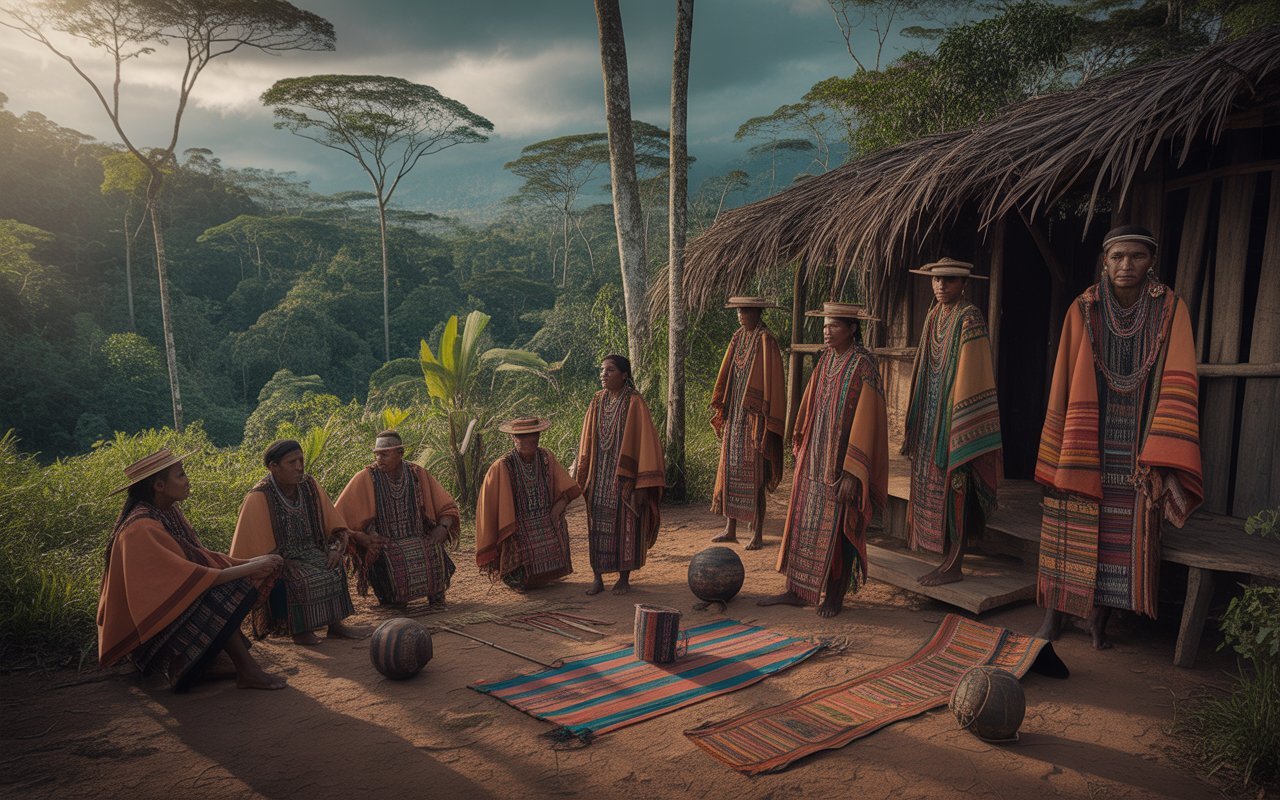
There is much more to Silpuri Guarani than merely a name. The Guarani people of South America have a rich cultural identity that is firmly anchored in their history, spirituality, and communal life. Despite not being widely acknowledged in scholarly circles as a separate language or dialect just yet, it is a living heritage that is supported by communities that maintain their language, customs, and relationship to the natural world.
Gaining knowledge about Silpuri Guarani can help one better understand indigenous variety, cultural resiliency, and language preservation initiatives in the contemporary world.
What Is Silpuri Guarani?
Fundamentally, Silpuri Guarani is a new name associated with local Guarani groups, mostly in Argentina, Brazil, and Paraguay. Silpuri is thought to relate to a particular local identity or cultural subset within the greater Tupi–Guaraní language family, of which the Guarani language is a member.
Ancestral stories that represent spirituality and harmony with the nature may be the source of the term “Silpuri.” These tales convey a worldview that values intergenerational customs and acknowledges the land as a living thing. Silpuri Guarani cultural identity is characterised by this spiritual and ecological link.
The Cultural Fabric: Beliefs, Traditions, and Language
- Strong Spiritual Bond with Nature: According to the Silpuri Guarani, the land is a living being that needs to be revered and safeguarded. Harmony with nature is central to their traditional beliefs, according to which each tree, river, and animal has spiritual importance. Ceremonial rites and everyday activities that respect the environment and ancestors’ spirits are guided by this link.
- Rich Ceremonial Practices and Oral Traditions: Dance, music, and storytelling are essential components of Silpuri Guarani culture. They commemorate significant life events like births, marriages, and harvests with colourful festivals and customs that follow seasonal cycles. Ancestral knowledge and communal ideals are passed down through the generations through oral histories and ceremonial acts.
- Traditional Knowledge and Community Craftsmanship: A fundamental aspect of their cultural history is the utilisation of medicinal herbs for therapeutic purposes. Using methods passed down from their ancestors, Silpuri Guarani craftspeople still produce musical instruments, textiles, and pottery. Social ties are strengthened and their distinct cultural identity is reaffirmed through communal dinners that feature traditional dishes.
Also Read More: Bigsteve Thecumhoover
Modern Influences: Challenges and Opportunities
The Silpuri Guarani group struggles to preserve their rich cultural legacy while juggling the demands of contemporary life. Their traditional ways of life have rapidly changed as a result of urbanisation and globalisation. There are conflicts between maintaining ancestors’ traditions and adjusting to modern lifestyles as a result of younger generations moving to cities or being influenced by popular culture. The way cultural stories are told is altered by the introduction of new technologies and outside media, which can occasionally dilute their original meanings or run the risk of commercialising religious rituals. The Silpuri Guarani continue to be resilient in the face of these challenges, actively looking for methods to adapt without sacrificing their core identity.
These contemporary influences also present opportunities, which the Silpuri Guarani have begun to seize. For instance, oral histories, traditional music, and ceremonial knowledge can be recorded and shared across community boundaries thanks to digital platforms. Youth participation and cultural exchange are facilitated by social media, which rekindles interest in and pride in indigenous history. A new generation that embraces both tradition and modernity is also being fostered via bilingual education programmes that increasingly include Guarani language and culture with national courses. The community is reclaiming their story in broader social and political contexts thanks to these initiatives.
However, there are possible advantages and moral conundrums associated with economic issues like tourism. Art exhibits and cultural festivals draw tourists and bring in money, which is crucial for local economies. Nonetheless, there are worries that religious rituals may be overly commercialised or misrepresented in order to attract outsiders. The Silpuri Guarani actively promote respectful tourism that enhances rather than exploits their culture by striking a balance between accessibility and authenticity. The struggle of indigenous people around the world to respect their heritage while interacting with a dynamic global context is reflected in this continuing conversation.
Step-by-Step Guide to Understanding and Supporting Silpuri Guarani Culture

A number of crucial actions must be taken in order to respectfully and meaningfully engage with and promote Silpuri Guarani culture. Here’s a useful, methodical approach:
- Listen to Community Voices: To begin, locate elders, cultural mediators, and local Silpuri Guarani community members and respectfully listen to their perspectives. Their personal accounts, viewpoints, and experiences offer genuine information that cannot be obtained from any other source.
- Consult Scholarly and Indigenous Research: Examine Guarani-related ethnolinguistic studies, cultural archives, and indigenously written works. You can gain a deeper grasp of language and cultural traditions by using scholarly materials like ethnographic surveys.
- Engage in Cultural Events: Whenever feasible, go to Silpuri Guarani festivals, rituals, or community events. A more vivid understanding of their live traditions is fostered by immersion in rituals, music, dance, and storytelling.
- Encourage Language Revitalisation Initiatives: A lot of programmes aim to teach and maintain Guarani and its dialects. To guarantee that these languages and cultural knowledge are preserved, support should be given to community language classes, bilingual education initiatives, and digital archiving.
- Promote Ethical Cultural tourist: Choose tourist approaches that give residents’ autonomy over cultural representation and financial gain first priority while visiting indigenous communities. Steer clear of practices that commercialise or misrepresent holy customs.
- Raise Awareness Responsibly: Educate others about Silpuri Guarani culture while maintaining truthfulness and deference. To expand activism, highlight the value of indigenous rights and cultural diversity.
The Importance of Linguistic Features in Silpuri Guarani
To appreciate Silpuri Guarani as a living language with strong ties to its people and environment, as well as a cultural identity, it is imperative to comprehend its linguistic characteristics.
- Agglutinative Morphology and Polysynthesis: Similar to other Guarani dialects, Silpuri Guarani probably expresses tense, mood, possession, and relational meanings by using affixes and suffixes that are joined to roots rather than by using independent auxiliary words. Within a comparatively small phrase structure, this intricate word-building mechanism allows for nuanced communication.
- Pronunciation and Nasal Harmony: The Guarani languages exhibit unique phonetic phenomena like nasal harmony, in which voiced consonants and adjacent vowels are affected by nasal sounds that propagate across syllables. Any regional variation, such as Silpuri Guarani, would maintain the rich and distinctive sound patterns of the language. For instance, depending on the situation, voiced consonants can have nasal or oral variations.
- Oral-centered Tradition with Ecological Vocabulary: Like kindred dialects, Silpuri Guarani places a great emphasis on oral transmission of songs, ritual discourse, and myths that are frequently difficult for written orthographies to adequately convey. The community’s strong ties to their environment are also reflected in the language’s preservation of regional lexicon related to flora, wildlife, natural topography, and spiritual traditions.
- The language’s nominal tense distinctions are frequently indicated by suffixes that indicate past and future states, such as “former” or “president-elect” equivalents, which allude to the subtle ways that time and identity are linguistically encoded. The language generally follows an SVO order.
- Glottal Stops and Distinct Sounds: Guarani dialects emphasise the use of glottal stops, which are rapid pauses in airflow, for pronunciation. Silpuri Guarani may still have this trait. This influences how phrases flow and are understood by adding to the language’s phonetic and rhythmic texture.
Preservation Efforts: Revitalizing a Living Language
A crucial cultural mission based on preserving the identity, history, and oral wisdom of indigenous populations is the preservation of Silpuri Guarani and related Guarani languages. Many contemporary efforts are being made to record, preserve, and revitalise this legacy of living languages.
- Community-Driven Documentation: Projects to document impromptu stories and narratives from native Guarani speakers, particularly those over 60, have been started by Paraguay’s Secretariat for Language Policy. Rural life, customs, beliefs, and language in its most unadulterated spoken form are captured in these audio and video interviews. Linguists, educators, and the community at large benefit from the transcription and archiving of the recordings, which help to preserve linguistic diversity that may otherwise be lost.
- Programmes for Bilingual Education: Spanish and Guarani have been co-official languages in Paraguayan schools since 1992, and bilingual education is becoming more and more important. Programmes seek to promote cultural pride and the multigenerational transmission of Guarani languages, including Silpuri variants, even if there are still obstacles to overcome, such as a lack of textbooks or social support. Tradition and modern education can be bridged by incorporating indigenous knowledge into modern curricula.
- Cultural Media and Outreach: To engage youth and promote Guarani languages, programmes use contemporary technology to concentrate on audio-visual media, social campaigns, and community festivals. Young people are encouraged to re-engage with their heritage in accessible ways through the sharing of traditional songs, stories, and cultural crafts on social media and cellphones. In addition to supporting local development, ethical tourism that fosters respectful cultural interaction raises awareness of global issues.
Impact on Society and Indigenous Identity
Particularly in Paraguay, the Silpuri Guarani and the larger Guarani language have a significant impact on society, influencing social cohesiveness, cultural pride, and national identity. As one of the few nations in Latin America where Guarani, an indigenous language, is extensively spoken by both indigenous and non-indigenous inhabitants, Paraguay stands out. From common conversation to literature, music, and religious rituals, this bilingual identity permeates every aspect of daily life, exhibiting a distinctive cultural synergy that is frequently referred to as “Paraguayidad”—a national character that is intricately entwined with Guarani tradition.
Beyond language, Guarani has an impact on cultural manifestations such traditional handicrafts, music, and gastronomy, including polka paraguaya, which combines Guarani and European elements, and sopa paraguaya and yerba mate usage. Catholicism and Guarani spirituality—particularly respect for nature and community-centered festivities—are frequently combined in Paraguayan religious traditions. In contrast to other Latin American nations where indigenous and European-derived cultures continue to be more distinct, this fusion portrays a persistent and dynamic indigenous presence within national culture.
Guarani has long represented solidarity and struggle. During the Paraguayan War (1864-1870) and colonial era, it acted as a rallying cry for cultural endurance and national identity. Guarani was socially discouraged during periods of military dictatorship, but the language persisted as a strong voice of the oppressed and a storehouse of traditional knowledge despite these suppressions. In the face of globalisation and contemporary issues, Guarani and its regional variants, such as Silpuri Guarani, remain steadfast symbols of cultural pride and identity, protecting indigenous history and promoting a sense of community.
Anecdotes Highlighting Silpuri Guarani’s Living Spirit
- María’s Song of the Forest: María, a young woman from a Paraguayan Silpuri Guarani hamlet, remembers listening to her grandmother’s old songs over the fire in the nights. These songs, which have been passed down orally through the generations, describe tales of ancestor spirits and the forest’s mysteries. María now records these songs on her smartphone and posts them on social media, influenced by contemporary technology. By combining traditional storytelling with digital outreach, she keeps the Silpuri Guarani voice alive and flourishing while also fostering connections among young people in her neighbourhood and beyond.
- The Festival of the River Spirits: Every year, the residents of a small village that is renowned for maintaining Silpuri Guarani traditions come together for this celebration. The celebration honours the river, which is seen as the lifeblood of their land, with ritual dances, offerings, and shared meals. Elders weave mythology and ecological knowledge together as they tell tales about their predecessors’ affinity with the river. This celebration is a prime example of how cultural customs endure even after many years, strengthening the bonds between faith, the environment, and communal identity.
- Craft Passages: Using clay from holy locations, José, a master craftsman from a Silpuri Guarani family, creates traditional ceramics. His father and grandfather taught him methods, and each vessel carried historical and cultural connotations. José just began teaching craft-making and Guarani language instruction to children in his hamlet. These workshops are more than just works of art; they are practical means of fostering a sense of identity and community, guaranteeing that the entire legacy of the community is passed down to future generations.
FAQs
What exactly is Silpuri Guarani?
Within the Guarani cultural and linguistic family, Silpuri Guarani is a new local variety and identity that is mainly spoken in Paraguay and the neighbouring regions.
How is Silpuri Guarani different from other Guarani dialects?
Silpuri Guarani is a distinct cultural expression that may be connected to a local clan or community identity, even though it shares many characteristics with other recognised Guarani dialects.
Are there efforts to preserve Silpuri Guarani culture?
Indeed. Silpuri Guarani is one of several indigenous languages that are being documented, taught, and revitalised by NGOs and community-led projects.
Why should I care about Silpuri Guarani?
Supporting and understanding Silpuri Guarani helps to preserve priceless human knowledge while advancing cultural diversity and indigenous rights.
Conclusion: Accepting Silpuri Guarani’s Living Thread
The tenacity, beauty, and intricacy of South American indigenous civilisations are exemplified by Silpuri Guarani. Even though it isn’t officially listed in linguistic records yet, it is a revered living heritage that should be honoured and encouraged.
People all throughout the world can appreciate Silpuri Guarani not just as a cultural designation but also as a rich, dynamic story that fortifies the human connection to heritage and place by listening to its stories, comprehending its linguistic characteristics, and participating in preservation efforts.
Also Read More: Ron Semler Net Worth


